
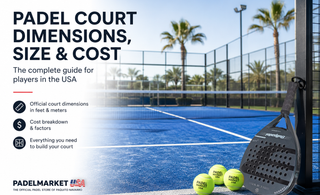
Whether you are planning to build a court, curious about the game, or just want to understand what you are looking at, knowing the official padel court dimensions helps. A padel court has a precise, standardized size set by the International Padel Federation, and this guide breaks down every measurement in both meters and feet, explains the walls, net, and service boxes, covers how much space and money a court needs, and compares padel to tennis. Sometimes called padel tennis, the game has exact dimensions that every player should know, and this comprehensive guide covers them all.
Official padel court dimensions
A standard padel court measures 20 meters long by 10 meters wide, which is about 65.6 feet by 32.8 feet. That gives a total playing area of 200 square meters, or roughly 2,153 square feet. These measurements are fixed by the official rules, so a regulation padel court is the same size whether you play in Miami, Madrid, or Dubai. The court is enclosed by walls and mesh fencing, which is what makes padel unique among racquet sports. Because a padel tennis court keeps the same exact dimensions everywhere in the world, players can move between clubs and countries and always find a familiar surface.
Padel court dimensions in feet
For players in the United States, the metric numbers translate cleanly. The court is 65.6 feet long and 32.8 feet wide. Each half of the court, on either side of the net, is 32.8 feet by 32.8 feet, forming a square. The net sits across the middle, dividing the court into two equal squares. Keeping these numbers in mind makes it easy to visualize the space when you are watching or planning a court.
The net and its height
The net stretches across the full 10-meter width of the court and divides it in two. A padel net is 0.88 meters (about 2 feet 11 inches) high at the center and rises to 0.92 meters (about 3 feet) at the two posts on the sides. This slight dip in the middle is standard and identical to how many net sports are set up, keeping play consistent across every regulation court. This net height shapes the ball bounce and the rhythm of every rally.
Service boxes and court lines
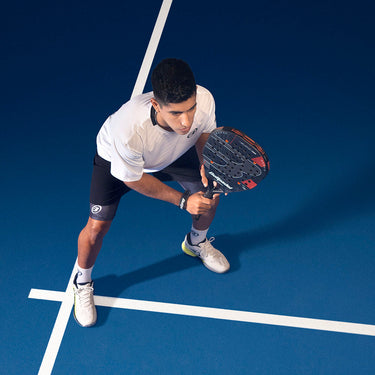
Inside each half of the court are the service areas. The service line runs parallel to the net, 6.95 meters (about 22.8 feet) from it, which places it 3 meters from the back glass. A center service line divides each service zone into left and right boxes, running from the net to the service line. These are the only lines painted on a padel court: there are no other markings on the playing surface, since the walls define the rest of the play. The two boxes are where each serve must land, and on some courts they are picked out in a contrasting color for visibility.
The walls: glass and mesh
The enclosure is what sets padel apart. The back walls are made of glass and stand 3 meters high, topped by 1 meter of metal mesh, for a total end height of 4 meters. The side walls step down in a staggered pattern of glass and mesh along the length of the court. Because the ball can be played off these walls after it bounces, the glass and mesh are an active part of the game, not just a boundary. This four meters of enclosure at the ends also matters for player safety, keeping the ball contained, while a generous ceiling height is important for indoor play.
Total space needed to build a padel court
The court itself is 20 by 10 meters, but you need extra room around and above it. Builders typically allow a minimum free height of 6 meters (about 20 feet) above the playing surface, and higher is better for indoor courts so that lobs are not obstructed. You also want a little clearance around the structure for maintenance and access. In practical terms, a plot of roughly 21 by 11 meters, with generous overhead clearance, is a sensible minimum for a single court. For new constructions, the location, the concrete base, and the materials all shape the project, so constructing a court to spec is a serious build.
Single padel court vs double
The 20 by 10 meter court described here is the standard doubles court, which is by far the most common since padel is almost always played two against two. There is also a smaller singles court, which is narrower at 20 meters by 6 meters, used for one-on-one matches. Singles padel is far less common, so when people talk about padel court dimensions they almost always mean the 20 by 10 meter doubles court.
The court surface
Most padel courts are surfaced with artificial grass filled with sand, which gives the controlled grip and predictable bounce the game is known for. The turf is comfortable underfoot, drains well for outdoor courts, and pairs perfectly with padel-specific footwear. Some courts use other synthetic carpets, but sand-dressed artificial turf is the standard you will encounter at most clubs.
How much does a padel court cost?
Building a padel court is a significant investment, and the price depends on the structure, surface, lighting, and site work. As a general guide, a quality court typically costs somewhere in the range of $25,000 to $60,000 or more, with panoramic all-glass courts and premium installations landing at the higher end. Site preparation, a concrete base, lighting, and installation labor all add to the total, so anyone planning a court should get detailed local quotes. World class courts and professional installations approved for competition sit at the top of the range.
Padel court vs tennis court size
Padel courts are much smaller than tennis courts, which is part of what makes the game so accessible. A tennis court measures 23.77 by 10.97 meters for singles play and sits within a larger total area, while the whole doubles tennis court is far bigger than a padel court. A padel court, at 20 by 10 meters, fits roughly three courts into the space of a single tennis court complex, which is one reason clubs can add padel without needing huge amounts of land. Compared with a traditional tennis court, a padel court is smaller and, like other racquet sports, rewards technique over power, which adds to the sport's accessibility for new athletes.
Why padel court dimensions matter
Understanding padel court dimensions is more than trivia. The fixed size is essential for fair, competitive play, and it is crucial for player safety, since the walls and run-off are designed to protect athletes during fast rallies. Consistent dimensions also support performance, because players can practice knowing every court plays the same. This standardization is one of the key benefits of padel and a big part of why the game is so much fun and easy to pick up, adding to its accessibility.
Padel courts around the world
Padel has exploded from its heartland in Spain to clubs across the world. A modern padel facility or padel club will feature one or more regulation courts, and a larger sports facility may house several. Spain remains a leading padel nation with world class facilities, but suitable courts are now appearing everywhere, from dedicated padel clubs to multi-sport venues.
Frequently asked questions
What are the dimensions of a padel court? A standard doubles padel court is 20 meters long by 10 meters wide (65.6 by 32.8 feet), with a total area of 200 square meters.
How high is a padel net? It is 0.88 meters high at the center and 0.92 meters at the posts, roughly 2 feet 11 inches to 3 feet.
How tall are padel court walls? The back walls are 3 meters of glass plus 1 meter of mesh, for a total of 4 meters at the ends.
How much space do I need for a padel court? Plan for at least the 20 by 10 meter court plus clearance, and a minimum of about 6 meters of free height above the surface.
Is a padel court smaller than a tennis court? Yes, considerably. Padel courts are more compact, which makes the game faster to learn and easier for clubs to fit into limited space.
Ready to get on the court?
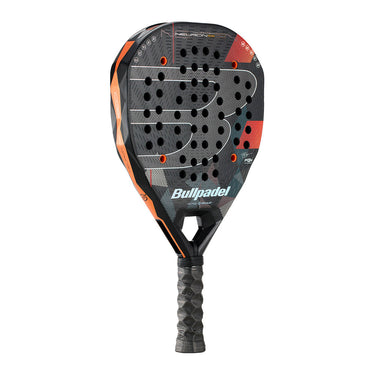
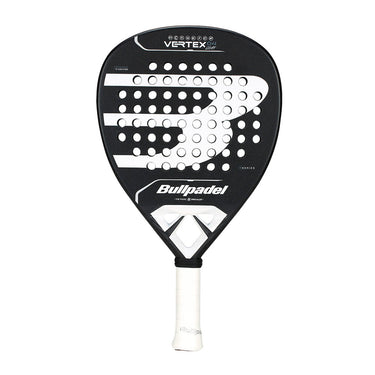
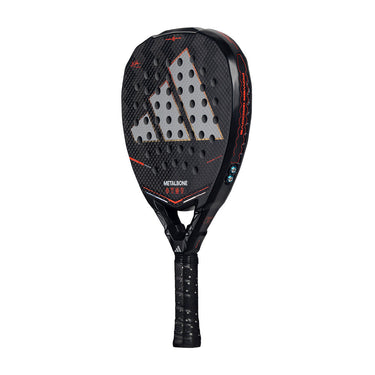
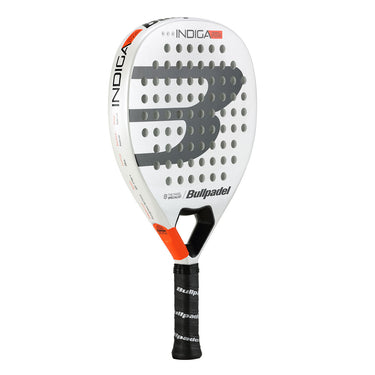
Now that you know exactly how a padel court is laid out, from its 20 by 10 meter footprint to its glass walls and low net, the next step is simply to play. Understanding the dimensions helps you read the game, use the walls, and position yourself well during a match. When you are ready to gear up, explore our padel rackets collection and padel shoes collection, grab a partner, and step onto the court.





)