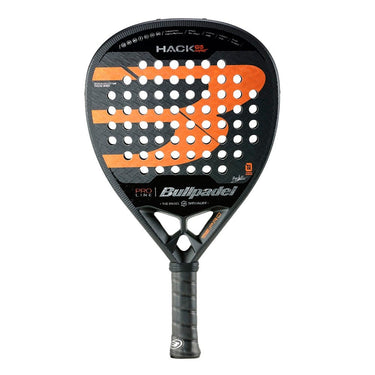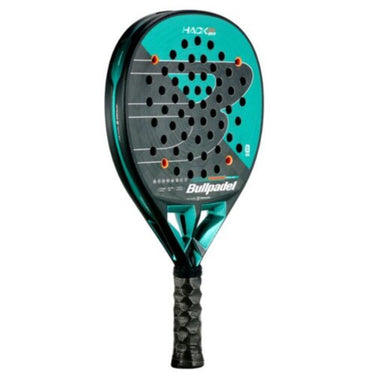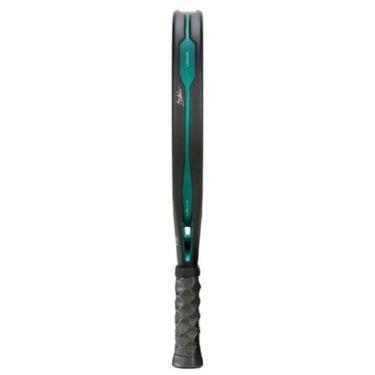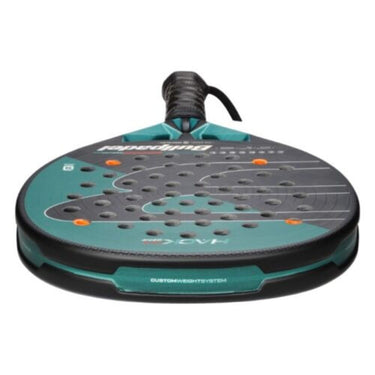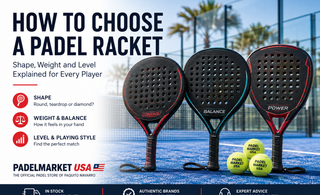
Choosing a padel racket is the decision that shapes how you play, how fast you improve, and how your arm feels after a long match. With dozens of models on the shelf it is easy to get lost, but the choice really comes down to three things: shape, weight and your level. This guide walks you through each one, explains what to look for at every stage of your padel journey, and points you to specific rackets in stock now at our US warehouse.
The three things that actually matter
Forget the marketing for a moment. Every padel racket is defined by its shape, which decides where the sweet spot sits; its weight and balance, which decide how it feels in your hand; and the materials of its face and core, which decide how much power and comfort it gives you. Match those three to your level and playing style and you will have the right racket. Everything else, from paint job to pro endorsement, is secondary.
Padel racket shape: round, teardrop or diamond
Shape is the first decision and the one that changes the most. A round racket puts the sweet spot in the centre of the face, close to your hand, which gives you the most control and the biggest margin for error on off-centre hits. It is the most forgiving shape and the right starting point for most players.
A teardrop racket moves the sweet spot slightly higher, balancing control and power. It is the natural middle ground and suits improving players who want a bit more punch without losing manageability. A diamond racket pushes the sweet spot high on the head for maximum power, which rewards a fast, clean swing but punishes mishits badly. Diamond frames are for advanced players who generate their own pace.
Weight and balance: how the racket feels
Padel rackets typically weigh between 350 and 390 grams, and that small range makes a big difference over an hour of play. Lighter frames, around 350 to 365 grams, are easier to manoeuvre at the net and gentler on the elbow, which is why they suit beginners and anyone prone to arm pain. Heavier frames carry more mass through the ball and reward players with strong technique.
Balance works alongside weight. A low balance puts the mass toward the handle so the racket feels lighter and quicker than the scales suggest, ideal for control and fast hands. A high, head-heavy balance loads the top of the frame for power on smashes, at the cost of manoeuvrability. If you are unsure, a light racket with a low balance is almost always the safer choice.
Weight distribution and why it matters
Weight distribution is the most important factor that new buyers overlook. Two rackets can weigh exactly the same on the scales and feel completely different in play, because what matters is where that mass sits. A low balance keeps the weight near the handle so the frame feels quick and you rarely feel like you are losing control. A medium balance sits in between and is the safest choice for most intermediate players, while a high balance puts more weight in the head for power.
The practical test is simple. If you struggle to get the racket into position when the ball comes fast, you have too much weight in the head. If your smashes feel weak despite good timing, you may need more weight up top. Most players who consistently hit clean shots end up preferring a medium balance, because it lets them attack without sacrificing reaction speed at the net.
Materials: face and core
The face of a padel racket is usually fiberglass, carbon fiber, or a blend of the two. Fiberglass flexes more, giving a softer, more forgiving feel at a friendlier price. Carbon is stiffer and more precise, transmitting more power and lasting longer, but it demands cleaner contact and can feel harsh to a new player. Carbon grades matter too: a 3K weave is softer than a 12K, which is denser and more rigid.
Inside sits a foam core, and it decides the comfort of the racket. Soft EVA and polyethylene cores absorb vibration and protect the arm, while high-density EVA delivers more power and a firmer response. For a first or second racket, soft beats firm almost every time.
Protecting your arm: vibration, foam hardness and tennis elbow
Padel is gentle on the joints compared with other racket sports, but the wrong frame can still cause problems. Tennis elbow is the most common complaint among players who move to a harder racket too quickly, and it usually comes down to two things: foam hardness and how much the hitting surface transmits shock into the forearm.
A soft core and a flexible hitting surface reduce vibrations significantly, which is why beginners and anyone with a history of elbow pain should avoid stiff, high-density frames. If your current racket leaves your forearm aching after a match, that is your equipment talking, not your fitness. Adding an overgrip, using a vibration dampener and dropping to a softer core will usually fix it. Playing padel should never hurt.
Choosing by level: beginner
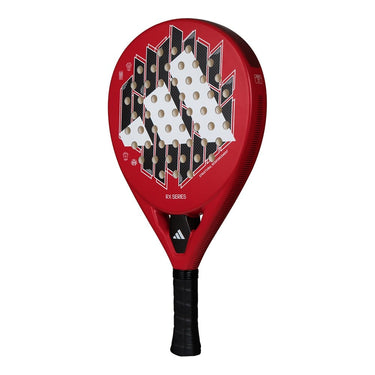
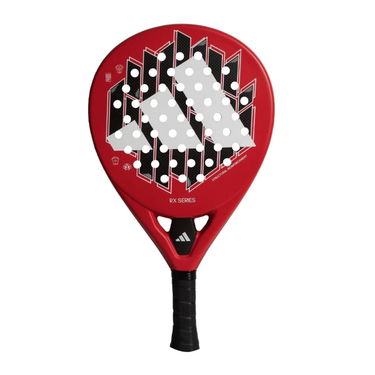
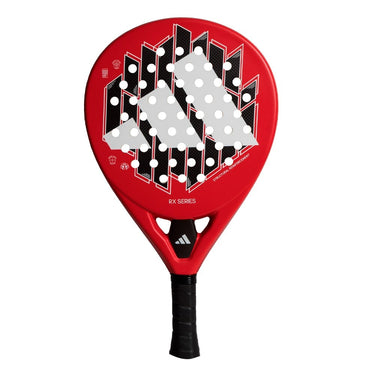
If you are new to padel, prioritise forgiveness above everything. Look for a round shape, a weight near 350 to 365 grams, a low balance and a soft core. Two in stock now fit this perfectly: the Bullpadel Indiga PWR 2025 ($99) is an easy, accessible frame that keeps the ball in play, and women players have the matching Bullpadel Indiga W 2025 ($99). For an Adidas alternative, the Adidas RX Series Red 2024 ($129) is the brand's most forgiving line. Our full guide to the best padel rackets for beginners goes deeper on this stage.
Choosing by level: intermediate
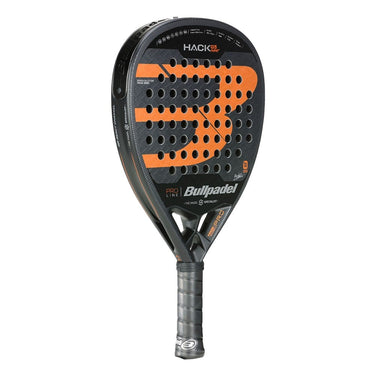
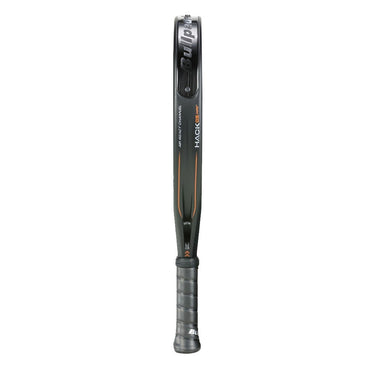
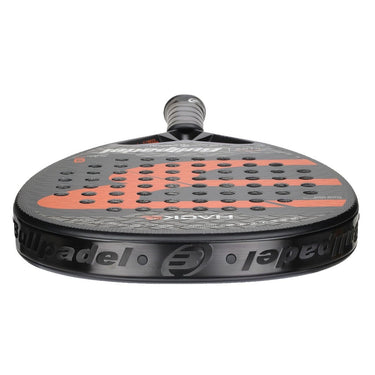
Once you can rally consistently and use the walls, you can move to a frame that gives more without punishing you. A round or teardrop shape with a slightly firmer core is the sweet spot. The Bullpadel Icon Cloud 2025 ($119), linked to Juan Martín Díaz, keeps a soft, controllable feel while adding precision, and the Head Gravity Motion 2022 ($139) is built specifically for the intermediate-to-advanced step. If comfort is your priority, the Bullpadel Hack 03 Comfort 2024 ($139) softens a power frame into something far kinder on the arm.
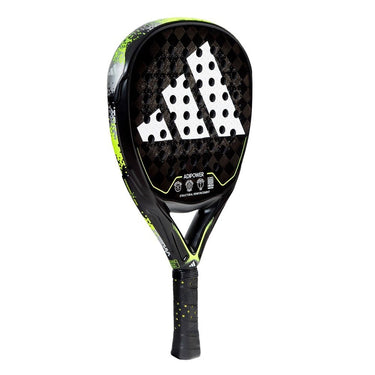
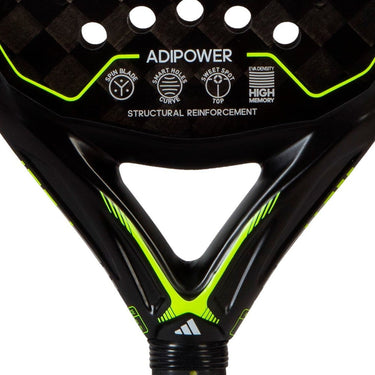
For an all-round option that does a bit of everything, the Adidas Adipower 3.2 2023 ($159) remains one of the most balanced rackets in the range, and the light Bullpadel Ionic Light 2025 ($159) is easy to swing all match.
Choosing by level: advanced
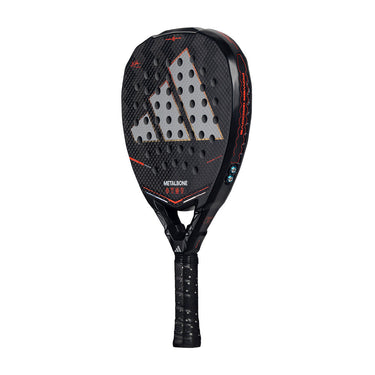
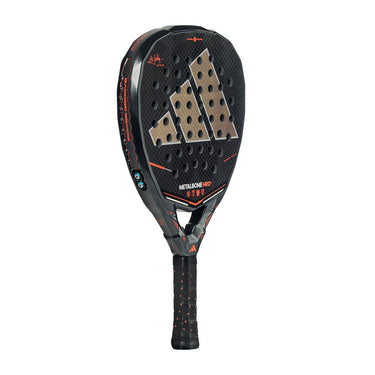
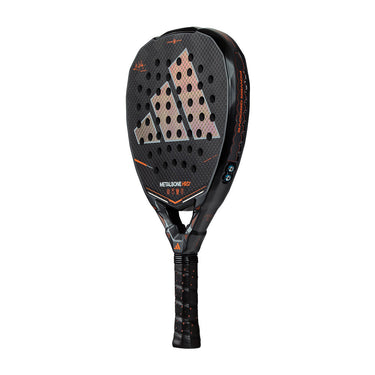
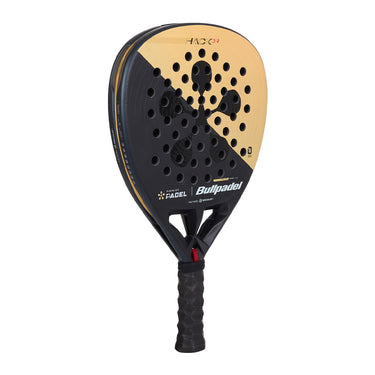
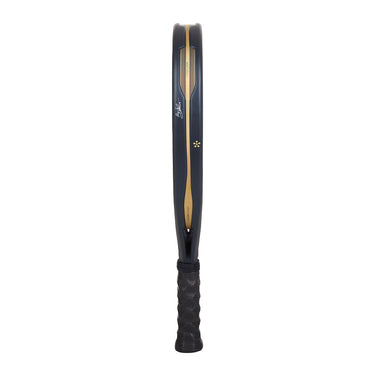
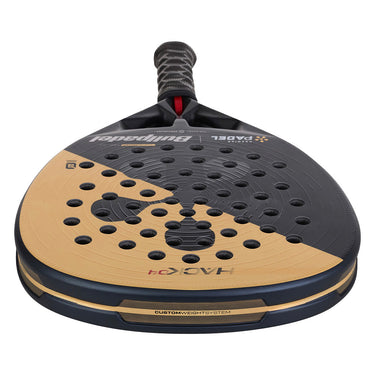
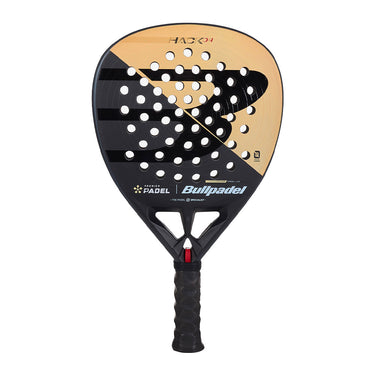
Advanced players can handle a stiffer, head-heavier frame and will get real benefit from it. If you attack and finish points, a diamond shape is the tool: the Bullpadel Hack 04 Premier Padel 2025 ($289) is Paquito Navarro's racket, and the Adidas Metalbone 2026 ($455) is Ale Galán's flagship, with the Metalbone HRD+ 2026 ($455) offering an even more rigid surface.
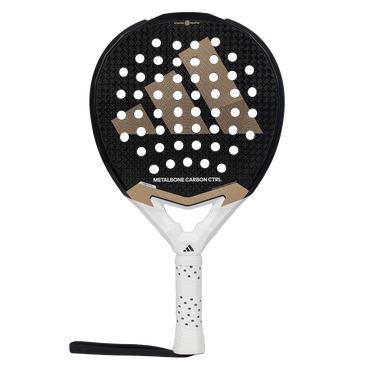
If you win points with placement rather than force, the Adidas Metalbone Carbon Ctrl 3.4 2025 ($219) brings the same pedigree in a far more controllable package. Our guide to the best padel rackets for advanced players covers this level in full.
Upgrading from your current racket
Knowing when to move on from your first racket is straightforward once you know what to look for. If you can consistently hit the ball out of the middle of the face, control your bandeja and use the back glass with confidence, you have outgrown a pure beginner frame and are ready for something with more bite.
Intermediate players usually benefit most from teardrop shaped rackets, which shift the sweet spot placement slightly higher without the harshness of a diamond shaped racket. Experienced players who have developed proper technique can move further still, into stiffer frames with more weight in the head. The mistake to avoid is skipping a step: jumping straight from an entry-level frame to a pro model is the fastest way to lose control of your shots and pick up an injury. The right padel racket is always the one that matches where your game is now, not where you hope it will be next season.
Choosing by playing style
Level is not the whole story: how you play matters just as much. If you like to attack, smash and finish at the net, lean toward a diamond or teardrop shape with a head-heavy balance, like the Bullpadel Vertex 04 Mexico 2024 ($249). If you build points patiently, defend well off the glass and win with placement, a round frame with a low balance will serve you far better.
Players who cannot decide have a genuine middle option in hybrid frames such as the Bullpadel Hack 04 Hybrid 2025 ($185), which blends attacking ability with more forgiveness than a full diamond, or the lighter Bullpadel Vertex 04 Light X Series 2026 ($179) for power without the weight.
Grip size and the wrist strap
Two small details make a real difference. Padel grips are fairly uniform, so most players adjust the feel with an overgrip: add one for a slightly thicker handle, or two if you have large hands. A grip that is too thin makes you squeeze harder, which tires the forearm and can contribute to elbow pain. And always use the wrist strap. It is required at most clubs and it stops a mishit sending the racket into the glass, or into your partner.
How much should you spend?
A good beginner racket costs around $99 to $140, and at that price you get everything a new player needs. Intermediate frames sit between $140 and $220, where you start paying for better carbon and more refined cores. Premium pro-level rackets run from $250 to $455, and that money buys advanced layups and the exact specification a professional plays with, benefits you can only exploit with developed technique. Spend according to your level, not your ambition.
When should you replace your racket?
Padel rackets do wear out. The foam core softens over time and the frame takes knocks from the glass and the floor, so a racket played several times a week will typically feel noticeably duller after a year or two. Signs it is time to change include a dead, muted response, visible cracks in the frame or face, or a rattle inside. Using a frame protector and avoiding extreme heat, like a car boot in summer, will extend its life considerably.
Frequently asked questions
What padel racket shape should a beginner choose? A round racket. The sweet spot sits in the centre of the face, giving the most control and the largest margin for error on off-centre hits.
How heavy should my padel racket be? Most rackets weigh 350 to 390 grams. Beginners and lighter players should stay near 350 to 365 grams with a low balance for easier handling.
Is carbon fiber better than fiberglass? Not automatically. Carbon is stiffer, more powerful and more durable, but fiberglass is softer and more forgiving, which suits new players better.
Does an expensive racket make you play better? No. An advanced racket can make padel harder to learn. The right racket for your level will improve your game far more than a premium one.
What is the difference between a round, teardrop and diamond racket? The position of the sweet spot. Round is centred for control, teardrop is balanced, and diamond is high on the head for maximum power.
How long does a padel racket last? With regular play, expect a year or two before the core softens noticeably. Careful storage and a frame protector extend that considerably.
Can the wrong racket cause tennis elbow? Yes. A stiff frame with a hard core transmits more shock into the arm. A softer core and an added overgrip reduce vibrations and usually solve the problem.
Ready to choose?
Start with your level, pick the shape that matches it, keep the weight manageable and choose a core that protects your arm. Get those right and the rest is detail. You can browse everything in our padel rackets collection, or go brand by brand with our guides to the best Adidas padel rackets and the best Bullpadel padel rackets. For the shortlist across every category, see the best padel rackets of 2026.