
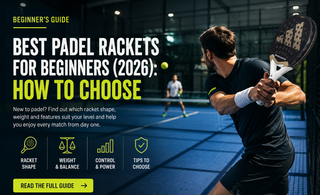
Padel is growing quickly in the United States, and picking the right gear makes learning it much easier. If you are shopping for the best padel rackets for beginners, this guide explains exactly what to look for, which racket shape and weight suit new players, how much to spend, and how to choose your first padel racket with confidence. It also lists the beginner-friendly rackets in our current US lineup, with the specs that matter for a first racket.
What makes the best padel racket for beginners?
The best beginner padel racket is forgiving, easy to control, and comfortable to swing. As a new player you want a racket that helps you keep the ball in play rather than one built for raw power. That means a round shape, a low or even balance, a large sweet spot, and a soft core that dampens vibration. Getting those basics right makes it easier to keep rallies going while you build your technique. You can see beginner-friendly options in our padel rackets collection.
Padel racket shape: round, teardrop or diamond
Racket shape is the single most important factor for a beginner. A round padel racket has its sweet spot in the center of the face, which gives you the most control and the largest margin for error, so it is the best padel racket shape for beginners. A teardrop racket sits in the middle, balancing control and power for improving players. A diamond racket puts the sweet spot high on the head for maximum power, which suits advanced players but punishes off-center hits. If you are just starting, choose round.
Weight and balance for a first padel racket
Padel rackets usually weigh between 350 and 390 grams. Beginners, and especially lighter players, are better off at the lower end, around 350 to 365 grams, because a lighter racket is easier to maneuver and less tiring to swing. Balance matters too: a low balance (weight toward the handle) makes the racket feel lighter and more controllable, which is exactly what a new player wants. Save the heavier, head-heavy rackets for when your technique and strength develop. A lighter, low-balanced racket also tends to feel less tiring over long matches, although technique and how often you play matter just as much. For a deeper look at weight distribution, see our guide on how to choose a padel racket.
Materials: fiberglass vs carbon fiber
Most padel rackets are made from fiberglass, carbon fiber, or a mix of both, wrapped around a foam core. Fiberglass is more flexible, so the face gives a little more on impact: it feels softer, it tends to help the ball come off the face at slower swing speeds, and it usually costs less. Carbon fiber is stiffer: it feels firmer and gives a more precise, direct response on fast, full swings, which is why it is common in advanced rackets. Durability depends on the whole construction, not only on the face material. For your first racket, a fiberglass face or a soft carbon-fiberglass blend is the sweet spot between comfort and value.
The core: EVA foam vs soft foam
Inside every padel racket is a foam core, and it shapes how the racket feels. Soft EVA foam and polyethylene (soft foam) cores feel more forgiving and pass less of the impact shock to your hand, which suits beginners building technique. Firmer, high-density EVA cores give a more direct, precise response when you strike the ball cleanly and with speed, but they feel harsher on mishits. As a new player, prioritize a softer core: it gives a more comfortable feel on impact and makes mishits less jarring. No racket can prevent injuries on its own, so if you already have arm or elbow pain, get advice from a medical professional before you play.
How much should a beginner spend on a padel racket?
You do not need an expensive racket to start playing padel. Entry-level rackets give a new player everything they need: a round shape, a forgiving core, and a fiberglass face. Spending more mainly buys stiffer carbon layups and features aimed at advanced players, which most beginners do not need yet. Start affordable, learn the game, and upgrade once your style is clear. Browse the beginner range in our padel rackets collection.
What to look for at a glance
When comparing the best padel rackets for beginners, run through a quick checklist: a round shape for control, a weight around 350 to 365 grams, a low balance, a fiberglass or soft-blend face, a soft foam core, and a comfortable grip size. If a racket ticks those boxes, it is very likely to be beginner-friendly. Rackets that are diamond-shaped, head-heavy, and made from stiff high-modulus carbon are built for advanced players and are best avoided at the start.
Our picks by type of beginner
Every new player is a little different, so start from how you play today. If you are an absolute beginner, new to racket sports or playing only occasionally, choose a round, light, low-balanced racket with a soft core; that is the profile of our main pick below. If you are a beginner who already plays tennis or another racket sport, the same round, forgiving profile is still the safest start, because padel technique and the walls take time to learn even with good hand-eye coordination. A diamond-shaped, head-heavy racket is not a starting point for absolute beginners: we list one only as a conditional alternative for beginners with racket-sport experience who specifically want more power and accept that it is less tolerant of off-center hits. Once you have moved past the first months and play regularly, a medium balance or a teardrop shape becomes a reasonable next step. The table below shows which rackets in our US lineup fit each beginner profile. As you improve, our guide to the best padel rackets for intermediate players covers the next step.
Beginner-friendly rackets in our US lineup
These are the rackets in our current US range whose product pages list them for beginner or amateur players, listed in order of how well they fit a first racket. Specs come from each product page; stock and models change from season to season, so check the product page before you order.
| Racket | Best for | Shape | Balance | Weight | Faces / core | Listed level |
|---|---|---|---|---|---|---|
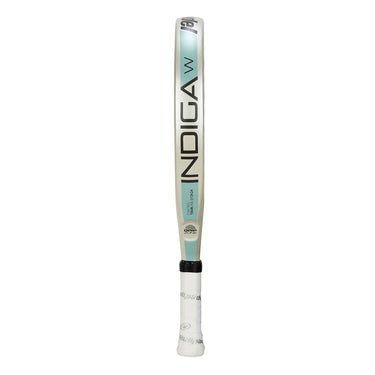
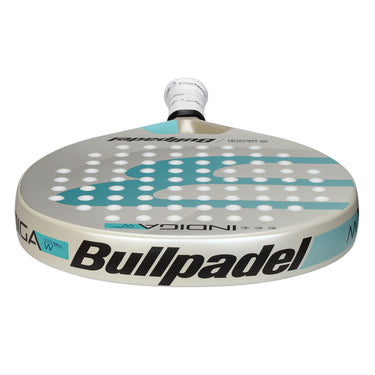
| Bullpadel Indiga W 2025 | Absolute beginners and beginners with racket-sport experience (main pick) | Round | Low | 350–360 g | Fiberglass / soft EVA | Beginner to intermediate |
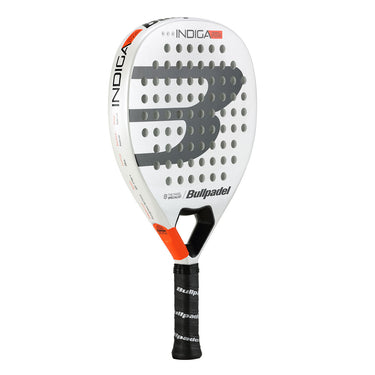
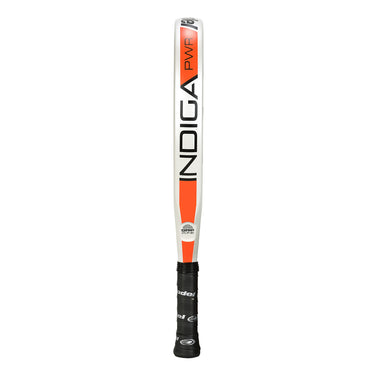
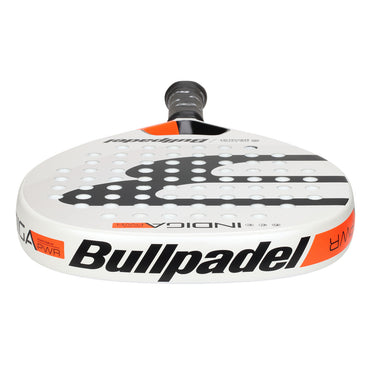
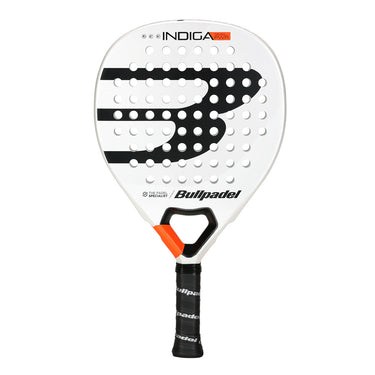
| Bullpadel Indiga PWR 2025 | Conditional alternative: beginners with racket-sport experience who want power | Diamond | High | 360–370 g | Fiberglass / soft EVA | Amateur |
Main pick for absolute beginners: Bullpadel Indiga W 2025
The Bullpadel Indiga W 2025 matches every point in our checklist: a round shape, a low balance, a light 350 to 360 gram build, Polyglass fiberglass faces and a SoftEva core. Bullpadel designs it for women players, and its light, maneuverable setup also makes it a good fit for any lighter player who wants as much control as possible while learning. If it is not the right fit for you, use the checklist above when you browse our padel rackets collection and check the playing level listed on each product page.
Conditional alternative, not for absolute beginners: Bullpadel Indiga PWR 2025
The Bullpadel Indiga PWR 2025 is a diamond shape with a high balance, which puts the sweet spot higher on the face and rewards a full, well-timed swing. It keeps the same fiberglass faces and SoftEva core as the rest of the Indiga line, and Bullpadel lists it for amateur players. Consider it only if you already have racket-sport experience, swing with confidence and specifically want more power; if you are starting from zero, choose the round racket above.
Once you know your style, our guides to the best Adidas padel rackets and the best Bullpadel padel rackets go deeper into each brand, and our guide to the best padel rackets of 2026 covers every category.
Coming from tennis or pickleball?
Many American players come to padel from tennis or pickleball, and both groups tend to make the same first-racket mistakes. Tennis players are used to long, fast swings with a strung racket, so they often reach for a heavy, head-heavy power racket; on a smaller court with walls, a round, control-oriented racket usually helps them adapt faster. Pickleball players are used to a lighter paddle and short, compact swings, so a padel racket can feel heavy at first; starting at the light end of the range, around 350 to 360 grams, with a low balance can make the switch easier. In both cases, focus on control first and add power once your timing on the glass is consistent. If you are new to the sport, our guide on how to play padel covers the basics.
Common mistakes when buying your first padel racket
New players often buy the wrong racket for the wrong reasons. The most common mistake is choosing a diamond-shaped power racket because a favorite pro uses one; that racket usually makes the game harder while you are learning. Others pick a racket that is too heavy, which tires the arm sooner and makes good technique harder to build, or chase the cheapest option and end up with a poorly made racket that does not last. Focus on shape, weight, and a soft core rather than looks or brand hype, and you are far more likely to choose well.
How to care for your padel racket
A little care keeps your first padel racket playing well for longer. Avoid leaving it in a hot car or in freezing temperatures, since extreme heat and cold can weaken the foam core and the frame. Use a protector on the frame edge to guard against scrapes on the court walls and floor, wipe the surface clean after playing, and always use the wrist strap so the racket stays attached to your wrist if it slips on a mishit. Store it in a cover or padel bag between sessions.
Frequently asked questions
What is the best padel racket shape for beginners? A round racket. It has the largest sweet spot and gives the most control and forgiveness, which is exactly what a new player needs.
How heavy should a beginner padel racket be? Around 350 to 365 grams with a low balance, so it feels light and easy to control.
Carbon fiber or fiberglass for a first racket? Fiberglass, or a soft carbon-fiberglass blend. It is more comfortable, more forgiving, and usually more affordable.
How much should I spend on my first padel racket? An entry-level racket with a round shape and a soft core is plenty to start. Upgrade later once you know your style.
Can a beginner use a diamond padel racket? It is not recommended for absolute beginners, because the sweet spot sits higher on the face and off-center hits are less forgiving. If you already have racket-sport experience and specifically want more power, a diamond with fiberglass faces and a soft core is a reasonable alternative; otherwise, start with a round racket.
Do I need an expensive racket to start? No. An expensive, advanced racket can actually make padel harder to learn. Start with a forgiving beginner racket.
Ready to choose your first padel racket?
To sum up, the best padel rackets for beginners are round, light, low-balanced, and built with a soft core and a fiberglass or soft-blend face, all at a beginner-friendly price. Match those features to your budget and you will have a racket that helps you learn. When you are ready to gear up, explore our padel rackets collection built for US players, grab a partner, and get on court.


:%20How%20to%20Choose)