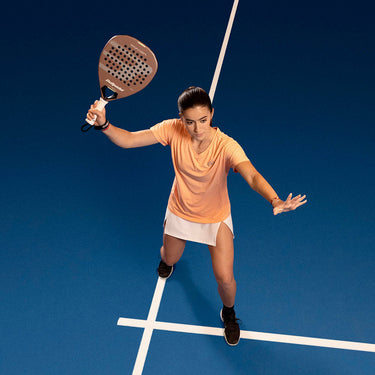
Padel has a vocabulary of its own, and most of it describes shots that simply do not exist in tennis. The bandeja, the vibora, the bajada, the globo: these are the tools that decide who controls the net and who stays trapped at the back. This guide explains every key padel shot, when to use it and how to hit it, so you can understand what your partner is shouting and start playing the right ball at the right moment.
Why padel has its own shots
Two things create the padel shot repertoire: the walls and the net. Because the ball stays in play off the glass, points last longer and defending is genuinely viable, so shots exist purely to keep your team at the net or to force the opposition away from it. And because the court is small and enclosed, hitting harder is rarely the answer. Padel rewards the player who plays the right shot over the player who plays the biggest one.
The bandeja: padel's signature shot
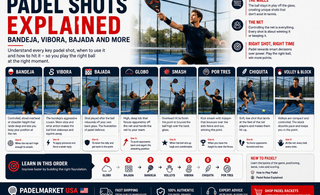
The bandeja, Spanish for tray, is the most important overhead in padel and the shot that defines a competent player. It is a controlled, sliced overhead hit at around shoulder height, played with a flat, open racket face that moves across the ball rather than down through it. The name comes from the motion, which looks like carrying a tray.
You use the bandeja when your opponents lob you but the ball is not high enough to smash. Instead of retreating and giving up the net, you step back, hit the bandeja with slice, and the ball travels deep with a low, skidding bounce. Crucially, you and your partner stay at the net. The bandeja is not a winner; it is a holding shot that buys time and keeps you in the strong position.
The key is control over power. Hit it at maybe sixty percent, keep the racket face open, brush across the ball to generate slice, and aim deep and wide toward the side glass so the ball dies in the corner.
The vibora: the aggressive cousin
The vibora, Spanish for viper, is the bandeja's more dangerous relative. It is also an overhead hit at shoulder height, but with a much more pronounced slice and a whipping wrist action that cuts across the side of the ball. The result is a shot that arrives faster, kicks sideways off the bounce and squirms away toward the side wall.
Use the vibora when you want to apply real pressure without committing to a full smash. It is harder to control than a bandeja and demands good timing, so most players learn the bandeja first and add the vibora later. Aimed well, usually at the opponent's side glass, it can force a weak reply or win the point outright.
The bajada: playing off your own back wall
The bajada is the shot you play after the ball has bounced and rebounded off your own back glass. It is fundamental to padel defence, because a ball that would be a clean winner in tennis simply comes back to you off the wall.
The technique is about patience and position. Let the ball pass you, move back with it, wait for it to come off the glass, and hit it as it drops into your strike zone. The most common beginner mistake is rushing: turning to face the wall, or swinging before the ball has finished rebounding. Watch it, stay side-on, and use a compact swing. A well-played bajada resets the rally and gets you back into the point.
The globo: the lob that wins matches
The globo, or lob, is the most underrated shot in padel and quite possibly the most effective. Its job is simple: lift the ball high over the opponents at the net and land it deep, forcing them to retreat and handing the net to your team.
In padel the net is everything, so any shot that dislodges the opposition from it is worth playing. A good globo is high enough that it cannot be smashed comfortably and deep enough that it lands near the back glass. Beginners tend to under-hit the lob and get punished; the fix is to commit and aim well past the service line. Many recreational points are won simply by lobbing more consistently than the other team.
The smash and the por tres
When the lob is short and the ball sits up high, the smash is on. Padel offers two versions. The flat smash aims down into the court for a clean winner or to bounce the ball high over the back glass. The kick smash, or por tres, is hit with topspin to send the ball bouncing over the side fence and out of the court entirely, winning the point outright at the highest level.
Smashing is tempting but overused. If the ball is not genuinely high and comfortable, the bandeja is the smarter choice. A missed smash surrenders both the point and your position at the net.
The chiquita: the low, dinking pass
The chiquita is a soft, low shot played from the back of the court that lands at the feet of the net players. It is not a winner and is not meant to be. Its purpose is to make the opposition hit up from below net height, which gives you a chance to move forward and take the net yourself.
The chiquita and the globo work as a pair: the lob pushes opponents back, the chiquita drags them forward and low. Alternating between the two is how good teams break down a strong net pairing.
The volley and the block
Volleys in padel are compact and controlled. There is no room for a long swing, so the racket stays in front, the grip stays firm and the shot is more of a punch than a stroke. Aim deep and low, and keep the ball away from the middle where opponents have the easiest reply.
The block is the defensive volley: when a hard ball arrives fast, you simply present the racket face and let the ball rebound off it, absorbing pace rather than adding any. It is the volley that keeps you in points you have no business winning.
Common mistakes and how to fix them
Most errors on these shots come down to preparation rather than technique. The single biggest one is a late contact point: players wait for the high ball to drop instead of turning side-on early and meeting it out in front. Prepare as soon as you see the lob go up, get your racket arm high, and you will hit a good bandeja far more often.
The second common mistake is angle. Players aim flat down the middle, which gives opponents an easy next ball. Aim wide toward the side glass and add depth, and the same shot becomes a genuine weapon. The third is failing to recover: after any overhead you must move back to your net position immediately, because a shot played well and followed by bad footwork still loses the point.
Avoid the temptation to master every shot at once. Pick one, drill it until you have consistency, then add variation. Watching your own footage back is the fastest way to spot what you cannot feel in the moment.
Coming to padel from tennis
Tennis players usually arrive with an advantage in hand-eye coordination and a serious disadvantage in shot selection. The instinct is to hit through the ball with topspin and to treat every overhead as a chance to finish. In the padel game that instinct costs points, because the walls give opponents time to recover and a hard shot simply comes back.
The habits worth unlearning are the full swing, which is too long for an enclosed court, and the flat overhead, which should often be a defensive smash or a bandeja instead. What transfers well is volleying and the ability to read depth. Focus on placement over pace, learn to dominate the net as a pair rather than as an individual, and your tennis background will start working for you within a handful of sessions. Our guide to padel vs tennis covers the wider differences.
Which shots should you learn first?
Learn in this order and your game will improve fastest. Start with the globo, because it is easy to hit and immediately effective. Then the bajada, since you cannot survive at the back without playing off the glass. Then the bandeja, which is what lets you hold the net instead of surrendering it. Then compact volleys. Only then move on to the vibora, the chiquita and the kick smash, which reward technique you will have built by that point.
If you are still learning the basics of the game itself, our guide on how to play padel covers positioning and the serve, and padel rules explains how the walls and scoring work.
Does your racket affect these shots?
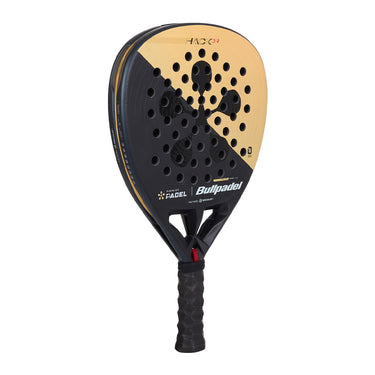
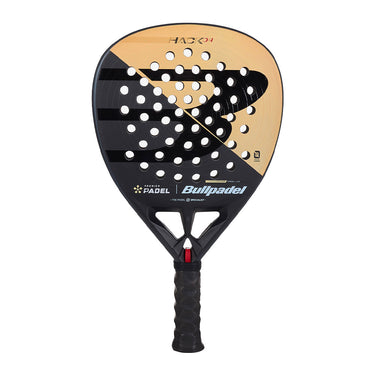
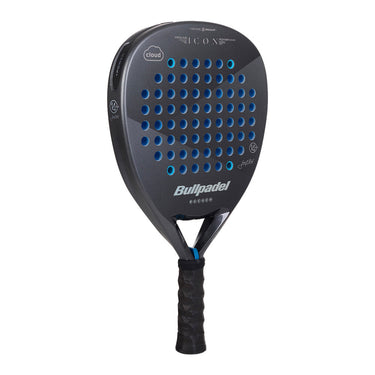
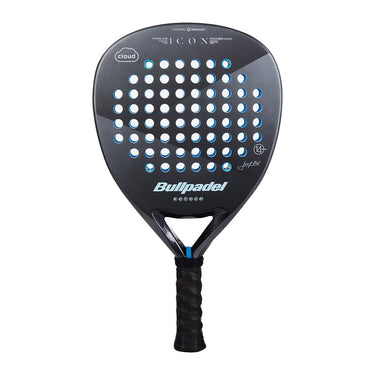
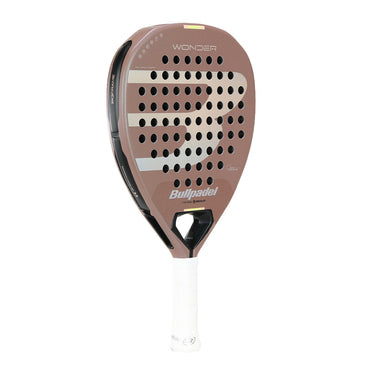
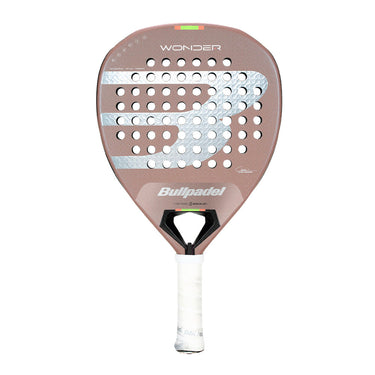
It does, more than most players expect. Controlled shots like the bandeja, the bajada and the chiquita are far easier with a round or teardrop racket that has a large, central sweet spot and a soft core, because those frames forgive imperfect contact. Diamond-shaped power rackets make smashes and viboras more potent but demand cleaner timing on everything else.
If you are working on your bandeja and your defensive game, a control-oriented frame will help you more than a power one. Our guide to choosing a padel racket explains how shape and balance affect each shot, and you can browse everything in our padel rackets collection.
Frequently asked questions
What is a bandeja in padel? A controlled, sliced overhead hit at shoulder height that lands deep and lets you keep your position at the net instead of retreating.
What is the difference between a bandeja and a vibora? Both are shoulder-height overheads, but the vibora uses more slice and wrist action, arriving faster and kicking sideways. The bandeja prioritises control.
What does bajada mean in padel? It is the shot played after the ball rebounds off your own back glass wall, and it is the foundation of padel defence.
Why is the lob so important in padel? Because the net decides points. A good globo forces opponents away from the net and hands your team the attacking position.
What is a por tres? A kick smash hit with topspin that bounces high enough to send the ball out over the side fence, winning the point outright.
Which padel shot should a beginner learn first? The lob. It is straightforward to hit and immediately changes who controls the net.
Putting it together
Padel is a game of position, and every shot in this guide exists to win or defend the net. Lob to push opponents back, bandeja to hold your ground, bajada to survive at the back, and smash only when the ball genuinely invites it. Learn these and you will win far more points than you would by simply hitting harder. When you are ready to match your gear to your game, explore our padel rackets collection, shipped fast from our US warehouse.