Padel rules are short and easy to learn, but a few of them, especially the serve and the walls, surprise most new players. This guide explains the official rules of padel as set out by the International Padel Federation (FIP) in its Rules of Padel, revision applicable from January 1, 2026: how a point starts, how padel scoring works, what the golden point and the Star Point are, how the glass walls and the metal fence work, and the ways you can win or lose a point. Start with the summary and the quick reference table, or jump to the rule you need to check.
Padel rules: the essentials
Padel is played by two pairs, one on each side of the net, on an enclosed padel court with glass walls and a metal mesh fence. If you are just starting out, these are the padel rules for beginners that matter most:
- Every point starts with a serve: the server bounces the padel ball and hits it at or below waist height, diagonally into the opponents' service box.
- The server has two attempts, a first serve and a second serve.
- The ball must bounce on the ground before it touches the walls or the fence on the receiving side. After that bounce, it can come off the glass and still be played.
- You must return the ball before it bounces a second time.
- You may play the ball off your own glass to send it over the net, but it must not touch the metal fence or the ground on your own side.
- Scoring works like tennis: 15, 30, 40 and game, with sets to six games. At deuce, the format can be advantage, the Star Point or the golden point, depending on the event.
Padel rules quick reference
| Rule | What it means |
|---|---|
| Players | Two pairs, one pair on each side of the net |
| Serve | Bounce the ball, then hit it at or below waist level, diagonally into the receiver's service box |
| Attempts | Two serves; a double fault loses the point |
| Serve touches the net | Let, if it then lands in the correct box and does not touch the metal fence before its second bounce |
| Serve hits the fence | Fault, if it bounces in the box and touches the metal fence before its second bounce |
| Return of serve | The receiver must let the serve bounce first |
| Walls in a rally | After one bounce on the receiving side, the ball can hit the glass or the fence and stay in play |
| Your own side | You can use your own glass; touching your own fence or ground loses the point |
| Scoring | 15, 30, 40, game; six games with a two-game lead win a set; tie-break at 6-6 |
| Deuce | Advantage, Star Point or golden point, depending on the format |
| Match | Best of three sets, unless the event uses a shorter format |
| Changing ends | After the first, third and every following odd game; every six points in a tie-break |
| Wrist cord | Required, worn around the wrist |
Players, court and equipment
The FIP rules are written for pairs. Each pair plays on its own side of the net, and the receiver, the receiver's partner and the server's partner can stand anywhere on their side of the court. Padel is sometimes called padel tennis, so padel tennis rules and padel rules are the same thing. It is not the same sport as paddle tennis or platform tennis, which have their own rules.
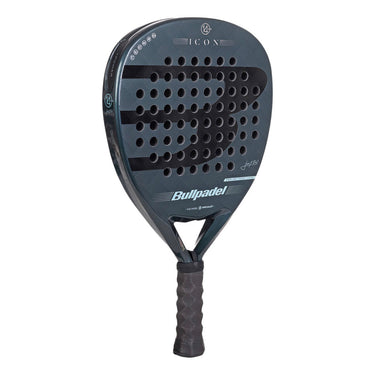
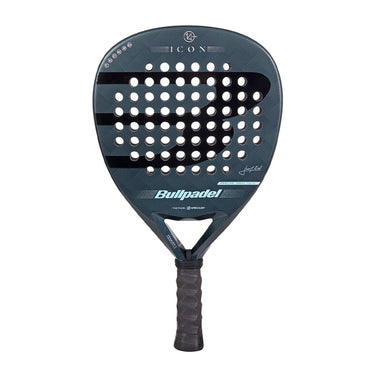
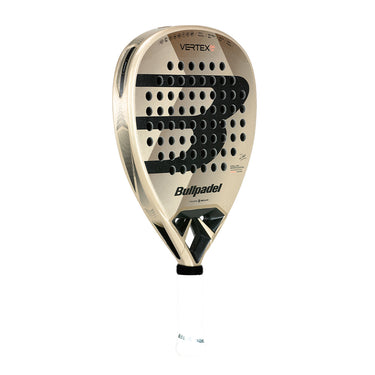
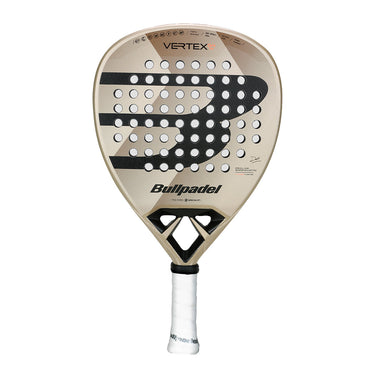
You play with a solid, stringless padel racket and a pressurized padel ball. The racket must have a non-elastic cord fixed to the handle, and the FIP makes wearing it around your wrist obligatory. The court is 20 x 10 meters (65 ft 7 in x 32 ft 10 in), divided by a net 0.88 m high in the center and 0.92 m at the ends (about 34.6 and 36.2 inches), and enclosed by glass walls and metal mesh. For every line and measurement, see our guide to padel court dimensions.
Padel scoring rules
Padel scoring follows the tennis system. Points are called 15, 30, 40 and game. If both pairs reach 40, the score is deuce, and what happens next depends on the scoring option in use, explained in the next section.
The first pair to win six games with a lead of at least two games wins the set. At 5-5 you play two more games, so a set can finish 7-5. At 6-6, a tie-break decides the set, which then finishes 7-6. A standard match is the best of three sets. Players change ends after the first, third and every following odd game of each set.
The tie-break
The tie-break is won by the first pair to reach seven points with a two-point lead, and points are counted 0, 1, 2, 3 and so on. It is started by the player whose turn it is to serve in the set's order. That player serves one point from the right side; the opposing pair then serves the next two points, starting from the left, and from then on each server serves two consecutive points, always following the service order. Players change ends every six points.
Shorter formats
Not every match is three full sets. The FIP rules also describe alternative scoring methods: a mini set, won by the first pair to reach four games with a two-game margin; a match tie-break to seven points, played at one set all to decide the winner; and a super tie-break to ten points with a two-point margin. When it has been established in advance, a third set can also be played without a tie-break, so it is won by two clear games. If you are joining a league or a tournament, check which format it uses before you play.
Deuce: advantage, golden point and Star Point
The FIP rules list three options for scoring a game. None of them is required in every match, so the one you play depends on the competition, league or club.
- Advantage. The traditional system. After deuce, the pair that wins the next point has advantage. If it wins the following point, it wins the game; if it loses it, the score returns to deuce.
- Star Point. Advantage is played up to twice. If the game returns to deuce a third time, a single deciding point, the Star Point, is played, and the pair that wins it wins the game.
- Golden point. Also called no advantage. At the first deuce, a single deciding point, the golden point, is played, and the pair that wins it takes the game.
For both deciding points, the receiving pair chooses whether to receive on the right or the left side of the court, and its players cannot change positions to receive that point. In mixed matches, the player receiving the deciding point must be the same sex as the server.
Padel serve rules
Every point begins with a serve, and most of the padel serve rules are about where you stand and how you hit the ball:
- Position. Stand behind the service line, between the imaginary extension of the center service line and the side wall, and stay there until you have hit the ball. Your feet may not touch the service line or the center line, and at least one foot must be in contact with the ground.
- Bounce first. Bounce the ball on the ground, inside the box you are serving from, before you hit it.
- Contact height. At the moment you hit it, the ball must be at or below waist level. That is why there is no overhead serve in padel.
- Direction. The serve must cross the net diagonally and land in the receiver's service box, and the lines count as good. Serving starts from the right side of the court, and the server then alternates sides after every point.
- Serving order. A coin toss decides who serves or receives first and who chooses the side. Before each set, each pair decides which of its players serves first, and that order cannot change until the next set.
- Receiver ready. Do not serve until the receiver is ready. A receiver who tries to return the serve cannot then claim not to have been ready.
First and second serve
If your first serve is not valid, you are allowed a second serve. Two consecutive faults, a double fault, lose the point. A serve is a fault when:
- the server breaks any of the serve rules above, for example by hitting the ball above the waist or touching the service line;
- the server tries to hit the ball and misses it;
- the ball bounces outside the receiver's service box;
- the ball hits the server, the server's partner or anything either of them is wearing or carrying;
- the ball bounces in the receiver's box and then touches the metal fence before its second bounce;
- the ball bounces in the receiver's box and then goes straight out through a court door, on a court without a safety zone where out-of-court play is not authorized.
Glass is different from the fence: a serve that bounces in the correct box and then hits the glass is not on the list of faults, so it stays in play and the receiver can return it after it comes off the wall.
Let: when the serve is replayed
The serve is a let, and is played again, when it touches the net or the net posts and then lands in the receiver's service box without touching the metal fence before its second bounce, or when it is served before the receiver is ready. If the let happens on the first serve, the whole point is replayed and the server again has two serves. If it happens on the second serve, only the second serve is repeated.
A point can also be replayed for interruptions unconnected to the players: for example, if the ball splits, an object comes onto the court, or the ball in play hits an object lying on the opponents' court, such as another ball, and that object moves in a way that could interfere with play or be dangerous. In matches with an umpire, the umpire decides whether a let applies.
Returning the serve
The receiver must let the serve bounce in the service box and return it before it bounces a second time. You cannot volley the serve: if the serve hits a receiving player or their racket before it bounces, the point goes to the server.
How the walls and the metal fence work
The walls are what make padel different from other racket sports, and the rules depend on which side of the net the ball is on.
On the receiving side
When your opponents hit the ball, it must bounce on the ground on your side before it touches your walls or fence. If their shot hits your glass, your fence or anything outside your court without bouncing first, they lose the point. Once the ball has bounced on your side, it can hit the glass walls or the metal mesh fence and is still in play, and you can return it as long as it has not bounced on the ground a second time. A ball that bounces into the corner where the wall meets the ground is also a good shot. Shots that use the walls, such as the bajada off the back glass, are covered in our guide padel shots explained.
On your own side
You can send the ball over the net directly or play it against the walls of your own court first, for example off your back glass, as long as it then bounces in the opponents' court. What you cannot do is hit the ball so that it touches the metal fence, or the ground, on your own side: either one loses the point.
When the ball leaves the court
If your shot bounces correctly in the opponents' court and then goes out of the court, over a wall or through a door, it is a good return. If the ball goes out over the back wall, your opponents lose the point. If it goes over a side wall or through a door on a court where out-of-court play is authorized, they may leave the court to play it, and they lose the point if the ball bounces a second time or touches something that is not part of the court. Out-of-court play is only allowed on courts that meet the FIP's conditions for it, with exits on each side and a safety area. A shot also wins the point if, after bouncing in the opponents' court, the ball goes through a hole in the metal fence, gets stuck in it, or gets stuck on top of the wall.
When is a point won or lost?
A rally continues until one pair breaks a rule. Your pair loses the point if:
- the ball bounces a second time on your side before you return it;
- your shot hits the opponents' walls or metal fence, or anything that is not part of their court, before bouncing on their ground;
- your shot touches the metal fence or the ground on your own side;
- you, your racket or anything you are wearing or carrying touches the net or the net posts;
- you hit the ball before it has crossed the net;
- you hit the ball twice, or you and your partner both hit it, at the same time or one after the other;
- the ball touches you or your partner after you hit it, or an opponent's shot hits your body or equipment instead of your racket;
- you hit the ball with a thrown racket, or jump over the net during the point;
- you hit the ball with one or both feet, or any part of your body, outside your court, unless out-of-court play has been authorized;
- you break your safety cord or drop your racket;
- you serve two consecutive faults.
Common faults to watch for
Keep these rules in mind in your first matches:
- Serving with the ball above your waist, or stepping on the service line.
- Volleying the serve instead of letting it bounce.
- Waiting for the ball to come off the glass and letting it bounce twice.
- Hitting a return straight into the opponents' glass without a bounce.
- Playing the ball into the metal fence on your own side.
- Touching the net with your racket after a shot close to it.
Padel rules vs tennis rules
If you come from tennis, the scoring will feel familiar, but some rules are very different. The serve is bounced and hit at or below waist level, the walls are part of the court, a shot must bounce before it touches the walls on the receiving side, the FIP rules are written for pairs, and many events settle deuce with a single deciding point. For a full comparison of the two sports, read padel vs tennis. If you are weighing up padel against pickleball, our guide to padel vs pickleball compares the rules of both sports.
Frequently asked questions
Can the ball hit the wall before it bounces? Not on the receiving side. Your shot must bounce in the opponents' court before it touches their walls or fence, or you lose the point. On your own side, you can play the ball against your own glass to send it over the net.
Is the padel serve underhand? The rules require you to bounce the ball and hit it at or below waist level, so there is no overhead serve like in tennis.
Can you volley the serve in padel? No. The receiver must let the serve bounce in the service box. If the serve hits a receiving player or their racket before bouncing, the point goes to the server.
What is the golden point in padel? It is a single deciding point played at deuce instead of advantage. It is one of three scoring options in the FIP rules, along with advantage and the Star Point, so check which one your match uses.
What is the Star Point in padel? It is a deciding point played if a game reaches deuce for the third time, after advantage has been played twice. The pair that wins the Star Point wins the game.
Is a serve that hits the fence a fault? Yes, if it bounces in the service box and then touches the metal fence before its second bounce. A serve that bounces in the box and then hits the glass stays in play.
Can you leave the court to play the ball? Only where out-of-court play is authorized, on courts with exits and a safety area that meet the FIP's conditions. On other courts, playing the ball with your body outside the court loses the point.
Choosing your first padel racket
The rules do not tell you which racket to buy, but they do require a wrist cord. If you are starting out, a forgiving, control-oriented racket makes it easier to keep the ball in play while you learn; our guide to the best padel rackets for beginners explains what to look for, and you can compare models in our padel rackets collection.
Final thoughts
Once you know how to serve, how scoring and the deciding point work, and how the glass and the metal fence affect a rally, you know the padel rules you need for your first match. For a practical walk-through of your first session on court, read our step-by-step guide on how to play padel.
Source: International Padel Federation, Rules of Padel (revision applicable from January 1, 2026).